









INDY NXT by Firestone: What is INDYCAR’s Development Series?
INDY NXT by Firestone is the development series of INDYCAR as it advances drivers and team personnel to compete in the NTT INDYCAR SERIES and the Indianapolis 500 presented by Gainbridge.
Since its first season in 1986, many of the INDYCAR SERIES racing’s biggest names develop their skills in INDY NXT by Firestone – formerly known as Indy Lights – including Scott Dixon, Greg Moore, Tony Kanaan, Helio Castroneves, Paul Tracy, Cristiano da Matta, Dan Wheldon and Josef Newgarden.
More recently, rising stars Pato O’Ward, Colton Herta, Kyle Kirkwood, David Malukas and Christian Rasmussen have raced in INDY NXT by Firestone while INDY NXT by Firestone champions Bryan Herta, Eric Bachelart and Jay Howard have become successful team owners.
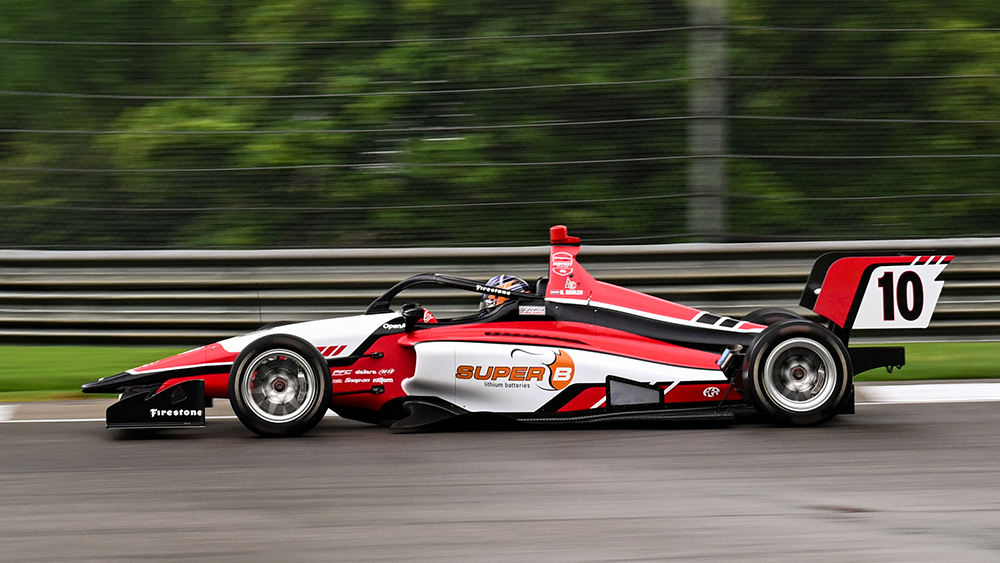
Anatomy of an INDY NXT by Firestone Car
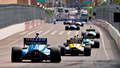
The Dallara IL-15 is a state-of-the-art, single-seat, open-wheel, INDYCAR SERIES-style chassis manufactured by Dallara Automobili. The chassis is outfitted with paddle shifters, push-to-pass and safety components meeting FIA specifications with INDYCAR standards (headrests, seats, secondary pedal bulkhead, zylon panels). The Advanced Engine Research (AER) INDY NXT 2.0-liter, turbocharged, inline four-cylinder powerplant is capable of running an entire season without a rebuild. The IL-15 was introduced in 2015 and was fitted with a cockpit protection device beginning in the 2021 season.
Chassis
Chassis: Dallara IL-15
Body: Carbon chassis and bodywork
Steering: Rack and pinion
Seating: Single-seat, custom fit to driver
Engine:
Type: Advanced Engine Research (AER) P63 turbocharged, inline four-cylinder
Displacement: 2.0 liters
Horsepower: 450 horsepower, plus 50 with Push to Pass
Weight: 230 lbs./104 kg dry-crated
Fuel: VP Racing Fuels gasoline
Exhaust: SST Technology
Electronics:
Cosworth looms, data logger, dash, display and sensors; Life Racing ECU, paddle-shift kit, "drive-by-wire" throttle control, driver-adjustable map settings
Drivetrain:
Gearbox: Xtrac 6-speed sequential gearbox with electronic shift actuation
Clutch: Tilton carbon three-plate
Suspension: Fully independent suspension front and rear, "pushrod" type with dampers mounted inboard on the chassis
Dampers: DynamicDSSV
Wheels and Tires:
Wheels: Patented Motegi Racing aluminum wheels with techno-mesh design. 15 inches x 10 inches front, 15 inches x 14 inches rear
Tires: Series-specification Firestone racing slicks and rain tires
Brakes: PFC rotos (309 mm x 28 mm), calipers (aluminum monoblock) and pads
Dimensions:
Top Speed: 210+ mph (speedways)
Weight: 1,410-1,430 lbs./640-649 kg (less driver/fuel)
Length: 192 inches/4,876 mm
Wheelbase: 117 inches/2,971 mm
Width: 76 inches/1,930 mm
Qualifying Procedures
INDY NXT by Firestone uses different qualifying formats depending on the track type and event, each designed to fairly determine starting positions while testing driver skill.
Oval Qualifying
Order: Qualifying order is determined by reverse order of entrant points entering the event. Teams without entrant points will be placed at the front of the order and ordered by blind draw. Each entry is presented one guaranteed attempt to qualify.
Warmup Laps: Each car is permitted two warmup laps before the timed qualification laps.
Green-Flag Laps: A qualification attempt consists of two consecutively timed laps. The aggregate time is recorded as the official qualifying time for the car, with the fastest aggregate time earning the pole position.
Road and Street Course Qualifying
Qualifying for INDY NXT by Firestone single-race road and street circuit weekends will begin by dividing the field into two groups based on the best lap times from the practice session immediately preceding qualifying. The fastest driver in that practice session will choose which group will compete in the first of the two qualifying sessions.
There will be 10 minutes of track time allotted for each qualifying group. If a car causes a red-flag condition during a qualifying session, its best two timed laps will be disallowed, and it will not be permitted to continue in the session. The timing of the session also will stop at the declaration of the first red-flag condition and will immediately resume at the declaration of a green flag.
The fastest driver between the two groups will be awarded pole position, with the drivers who finished behind that driver, in order and in that group, occupying the odd-numbered starting positions (3, 5, 7, etc.) for the race and the drivers who finished in order from the other group occupying the even-numbered starting positions (2, 4, 6, etc.). One driver and entrant championship point will be awarded to the fastest car in each qualifying group.
Lineups for race weekend doubleheaders will be set by the entrant’s best lap determining their starting position for Race 1 and their second-best lap determining their starting position for Race 2.